


Where to Get Emergency Dental Care for Children in Maryland (Urbana, Frederick & Surrounding Areas)

When your child has a dental emergency, everything else stops.
One moment you're going about your day, and the next you're holding a crying child with a swollen cheek, a knocked-out tooth, or a mouth full of blood from a fall. Pain, fear, and uncertainty hit all at once — and you need answers fast.
For families across Urbana, Ijamsville, Frederick, and surrounding Maryland communities, I want you to have those answers before that moment arrives. Because when your child is hurting, you shouldn't have to figure it out from scratch.
Emergency dental care isn't just about treating a tooth. It's about protecting your child's comfort, their developing smile, and their sense of safety.
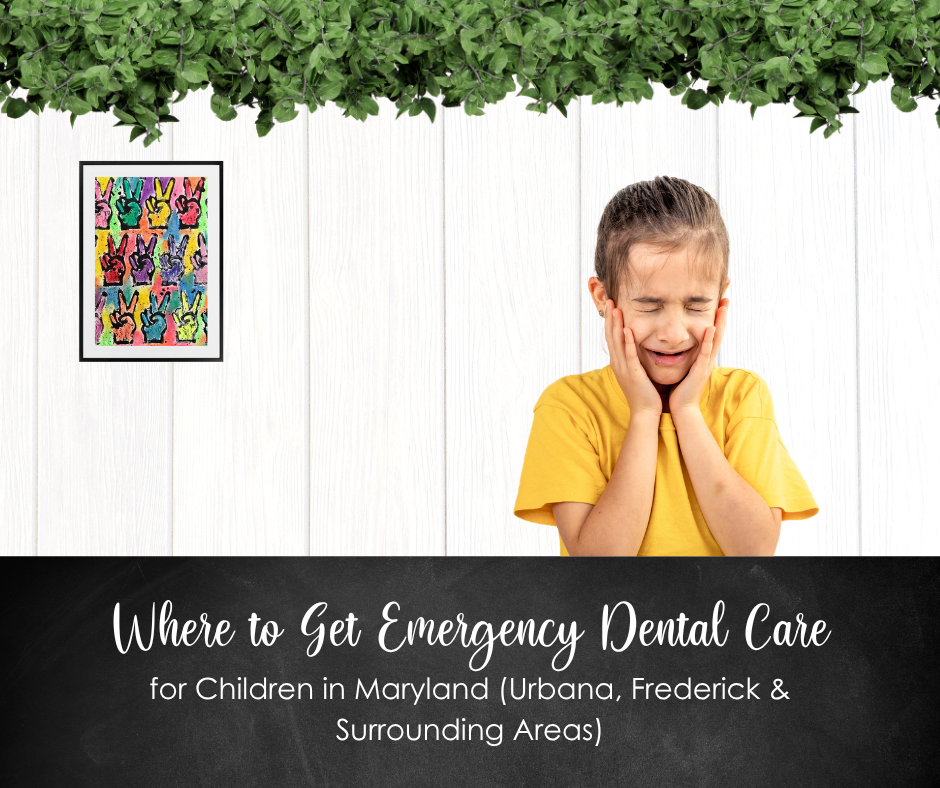
What Counts as a Pediatric Dental Emergency?
Children experience dental emergencies differently than adults. Their teeth and jaws are still developing, which means even injuries that seem minor deserve a closer look.
The most common emergencies we see at our office serving Frederick County and Central Maryland include:
Persistent toothaches or sensitivity that makes eating painful
Swelling in the gums, cheek, or face — especially with fever
Dental injuries from falls, collisions, or sports
A chipped tooth can look harmless on the surface, but deeper fractures can reach the nerve and lead to infection. A knocked-out permanent tooth is always an emergency. And even trauma to baby teeth warrants evaluation — damage to the root can affect the permanent tooth developing beneath it.
If your child is in pain, has visible swelling, or has experienced any trauma to the mouth, call a pediatric dentist as soon as possible. When in doubt, call.
Why Timing Matters
In dental emergencies, the window for the best outcome can be surprisingly short.
A knocked-out permanent tooth has the highest chance of being saved if it's re-implanted within the first hour. Infections can escalate quickly — what starts as localized swelling can spread if not treated promptly.
Families often tell me they weren't sure whether to wait and see or act right away. My answer is always the same: early care is almost always simpler, less invasive, and more comfortable for your child than care that comes too late.

Emergency Dental Care for Children in Urbana Maryland: Where to Go
When you need emergency dental care for children in Urbana Maryland, your options depend on the severity of the situation and the time of day. Here's how to think through it:
Your child's pediatric dentist should be your first call. At our office in Ijamsville — serving Urbana, Frederick, and surrounding families — we hold time in our schedule specifically for urgent visits. We also guide families through emergencies outside of regular office hours, so you're never left without direction.
If you don't yet have a pediatric dentist, look for a board-certified pediatric dentist in Frederick County. Pediatric specialists have advanced training in dental trauma and emergency care for children that general dentists don't receive.
Hospital emergency rooms are the right choice for serious trauma — facial injuries, difficulty breathing from swelling, or accidents involving the head or jaw. That said, ERs are not equipped to provide definitive dental treatment. They can stabilize and manage pain, but your child will still need follow-up with a pediatric dentist.
Urgent care centers can help with pain management or prescribe antibiotics, but they cannot treat the underlying dental problem. A dental follow-up is still necessary.
What to Do Before You Reach the Dentist
The right steps at home in the first few minutes can protect your child's smile and make treatment easier.
If a permanent tooth is knocked out: Pick it up by the crown — never the root. Rinse it gently if it's dirty, and try to reinsert it into the socket. If that's not possible, place it in a small container of milk and get to a dentist immediately. Time is critical.
For a toothache: Gently clean around the area and check for anything caught between the teeth. A cold compress applied to the outside of the cheek can help manage discomfort until you're seen.
If there's swelling with fever: This combination suggests infection. Don't wait — contact a dentist right away.
Throughout all of it: stay calm. Children read your emotional state. Your steady presence is one of the most powerful things you can offer them in a frightening moment.

How We Handle Emergencies at Urbana Pediatric Dentistry
When a family comes to us in crisis, our first job isn't just clinical — it's to make everyone feel less scared.
We slow down. We explain what's happening in language children understand. We let your child set the pace as much as the situation allows. Our office was designed intentionally to feel warm and welcoming rather than clinical or intimidating — because a child who feels safe is a child who can cooperate with care.
And sometimes, Teddi — our therapy dog — makes all the difference. There is something about a gentle dog curled up nearby that can take the edge off even the most anxious visit.
We tailor every emergency visit to your child's specific needs, whether that means simple reassurance and monitoring, or more involved treatment. No two emergencies are exactly alike, and we don't treat them that way.
Preventing Dental Emergencies
Not every emergency can be prevented — but many can be reduced.
Routine dental visits let us catch developing problems before they become painful ones. For active kids in Frederick County and surrounding areas, a properly fitted mouthguard during contact sports significantly reduces the risk of dental injury.
At home, habits matter too: avoiding chewing on hard objects, maintaining consistent brushing, and addressing tooth decay early all lower the likelihood of an emergency down the road.
Most importantly, establishing a dental home before an emergency happens means you already have a trusted team to call. You're not searching in a panic — you're picking up the phone and calling someone who knows your child.

What to Look for in a Pediatric Emergency Dentist
When searching for emergency dental care for your child, the clinical qualifications matter — but so does the environment.
Look for a board-certified pediatric dentist with specific experience in dental trauma and emergency care. Look for a practice designed with children in mind, with a team trained to work with anxious or frightened kids. And look for a provider who takes the time to explain your options rather than rushing you toward a decision.
For families in Urbana, Ijamsville, Frederick, and nearby Maryland communities, having that relationship in place before an emergency is one of the best things you can do for your child's long-term dental health.
A Dental Home for Every Stage
At Urbana Pediatric Dentistry, we're here for your family through all of it — first visits, routine care, and the unexpected moments in between.
If you're in Urbana, Frederick, Ijamsville, or the surrounding Maryland area and you don't yet have a pediatric dental home, we'd be honored to be yours.
Dr. Dina Chehab is a board-certified pediatric dentist serving families across Urbana, Ijamsville, Frederick, and Central Maryland. Urbana Pediatric Dentistry offers comprehensive pediatric dental care, including urgent and emergency visits, in a warm, child-centered environment.
FAQs
What should I do if my child's tooth is knocked out?
Act immediately. For a permanent tooth, pick it up by the crown — never the root — rinse it gently if dirty, and try to reinsert it into the socket. If that's not possible, store it in milk and call us right away. Every minute matters. For a baby tooth, do not attempt to reinsert it, but still call — we need to evaluate for damage to the permanent tooth developing beneath it.
How do I know if my child's dental problem is a true emergency?
If your child is in significant pain, has facial swelling, has experienced trauma to the mouth, or has a knocked-out permanent tooth, don't wait. When you're unsure, call us. We'd always rather talk you through it and determine together whether you need to come in than have you wait too long on something that needed early care.
Does your office see emergency patients same day?
Yes. We reserve time in our schedule specifically for urgent visits. If your child needs to be seen, call us first — even outside of regular office hours, we provide guidance on next steps.
My child knocked out a baby tooth. Is that an emergency?
It depends. Baby teeth should not be reinserted, but the injury still warrants a call. We need to check that the socket is intact, that no tooth fragment remains, and that the underlying permanent tooth wasn't affected by the impact.
Can I take my child to an urgent care or ER for a dental emergency?
For serious trauma — facial injuries, difficulty breathing from swelling, or head injuries — an ER is the right first stop. For dental-specific emergencies like a knocked-out tooth, severe toothache, or dental abscess, a pediatric dentist is better equipped to treat the actual problem. Urgent care and ERs can manage pain and prescribe antibiotics, but they cannot restore a tooth or drain a dental abscess.
What if my child has a toothache but no visible swelling?
Still call. A toothache that persists beyond a day, worsens with pressure or temperature, or keeps your child up at night is telling you something. Waiting rarely makes dental pain better — and catching a problem early almost always means simpler treatment.
My child has swelling and a fever. How urgent is that?
Very. Swelling combined with fever can indicate a spreading dental infection, which requires prompt treatment. Call us immediately or, if it's after hours and the swelling is significant or affecting breathing, go to the ER.


